



Ferrying Second Chances in a Suitcase
Living Between Cultures
This is a bleak book. But then again, let’s face it. Reality is and was bleak for many women. Written by Susham Bedi, an acclaimed Hindi writer who also taught the language at Columbia University, The Fire Sacrifice documents the migrant experience of Indian women, in an America that was at least in its projected image, more welcoming of immigrants than it is today.
When America Felt Limitless
In an era when such things were possible, the protagonist Guddo’s green card is sponsored by her sister, Pinky. As a widow with three children, Guddo feels her dollar-earning prospects can yank her family from diminished Indian lives. After all, America in the ‘70s exudes abundance. When Pinky had visited many years ago, “[she] looked the very picture of corn-fed health.” Seeking similar excesses, Guddo drops off her college-going daughters at a local hostel, and flies her young son and nervy self across the oceans.
Sliding Down the Status Ladder
But squeezing into the sister’s New York home is far from congenial. There are questions of who’s sharing the chores, who’s paying for stuff. Guddo finds a salesperson’s job at a subway station, selling magazines, cigarettes, chocolates et al. She accepts the eroded status in the manner of most immigrants, with the tight-lipped stoicism of the desperate.
Watching an Unvarnished New York
From the confines of her stall, Guddo watches bustling crowds spill in and out of compartments. Early mornings, young folks scurry into the subway, their coats and scarves snagged by whooshing doors. Later, older folks trot in at a slower pace. The city swarms with people, but it’s also lonely. An old white man who knows Hindi and has been to India chats her up. He visits the stall often to converse with her, repeating the same things. Once, she gets held up at gunpoint, and tremulously hands over all the cash. She loses her job and a week’s pay.
But her Boy Broods
When she’s anxious, as she often is, she chants mantras. Aren’t they supposed to intercede, the many gods she summons? Maybe they do, sort of. Because soon enough, she lands another salesperson’s job, at a kitchen and home appliances store. But her son, Raju, grows gloomy. A gang clobbers him on the way home from school and he can’t make friends in the new place.
Flung Into the Streets
One day, when Guddo gets home, her suitcases are packed. She and Raju are being hurled into New York’s treacherous streets. An infuriated Guddo leaves with a trail of curses. Fortunately for her, another sister, Gita, and her family live in a cramped apartment. Guddo and Raju occupy their living room. But even this place hisses with rancor. Gita’s husband doesn’t like being a doorman or selling trinkets at the weekend flea market. Scrounging about for every dollar, the penny-pincher brother-in-law starts making unsavory advances.
A Damp Basement Restart
Guddo’s distress surges. Despite her faith, despite her constant mantra-muttering, the gods take more than they give. She and Raju move into a dark, dank basement. Where they not only quiver with fear, but also loneliness. At an Indian temple, she bumps into a suave doctor, Juneja, who seems taken in by her. When she’s invited into his family’s opulent home, she imagines such a future for her kids.
Chasing the American Dream
It’s a yearning that drives her to Chinatown, where she signs up, at the age of 45, for an accountancy course. Her fellow students are Black, Latino or Asian. Guddo applies herself with such ferocity, she tops the class. And is among the few to land a bank clerk’s job, after cutting her hair, donning Western clothes and modifying her accent to sneak past terrorizing interviewers.
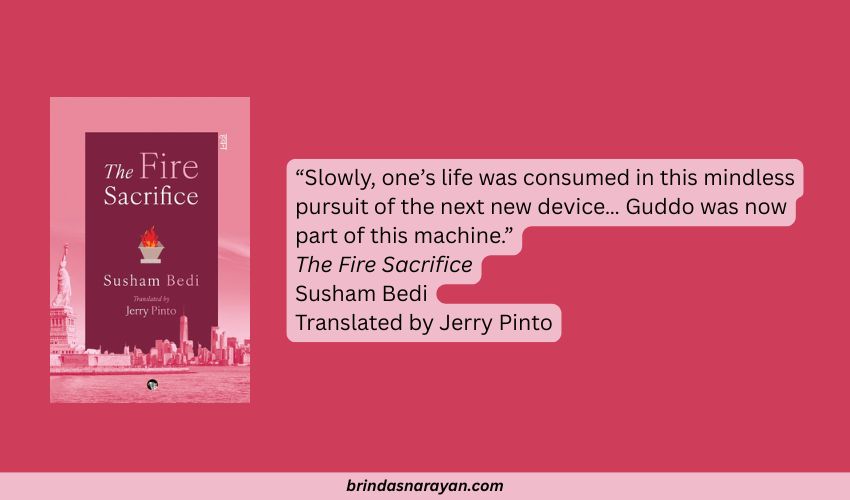
In the process, she absorbs the paradoxes of America. Despite being a widow, she can wear bright saris or make-up, without heeding neighbors’ jabs. But there are new rules. There’s much attention paid to surfaces. “This is a place where dress and make-up become determinants of personality.” Relentless work routines are punishing and can sometimes feel pointless. “Every season brought a fresh crop of labour-saving machines, and the pursuit of these machines made human beings into machines that toiled to buy machines.”
Intoxicated With Love
In the meanwhile, she shrugs off her Indian morality and embarks on an affair with the married Juneja. It’s a fling that feels occasionally gratifying but also expedient. Once, when she asks him about his wife, he casually suggests they occupy different spaces. Though she persists in her liaison and even uses him to get her daughter a hospital internship, she suffers from pangs of guilt and self-loathing.
Bitter Beginnings and Ends
Eventually, Guddo gets both her daughters married and sponsors the green cards of her dead weight, infuriating sons-in-law. There are no happily-ever-afters in this tale, but it depicts, with brutal clarity, the violence and trepidation braided into lower-strata, diasporic lives. When the many New Yorks in the skyscraping city collide with the many Indias from our jam-packed nation, sparks erupt.
In a globe that’s fracturing along frightening lines, this novel compels us to attend to the origins of discord: to families and neighborhood cultures and intergenerational differences, among other things. Skillfully translated by Jerry Pinto, the book suggests, without any didactic moral takeaways, that peace in the world might emerge from being at peace with the world.
References
Susham Bedi, The Fire Sacrifice, Translated by Jerry Pinto, Speaking Tiger, 2026