



Home, Hearth and a Twisty Plot
A Primer on Tradwives
While tradwives might have lurked in relative anonymity for a couple of decades, apparently the Google search for “tradwives” spiked in 2020. For anyone unfamiliar with the term, tradwives are not merely traditional wives. The social media broadcasting of their submissive, gendered role is critical to their makeup. As Alena Kate Pettitt observed in a BBC episode titled, “Submitting to my husband like it’s 1959: Why I Became a Tradwife,” they are homemakers who choose to perform a roster of domestic chores with an envious cheer – bake biscuits, educate children, wash dishes and clothes, milk cows, grow vegetables, feed horses – to garner followers.
Picking Aprons Over Anger
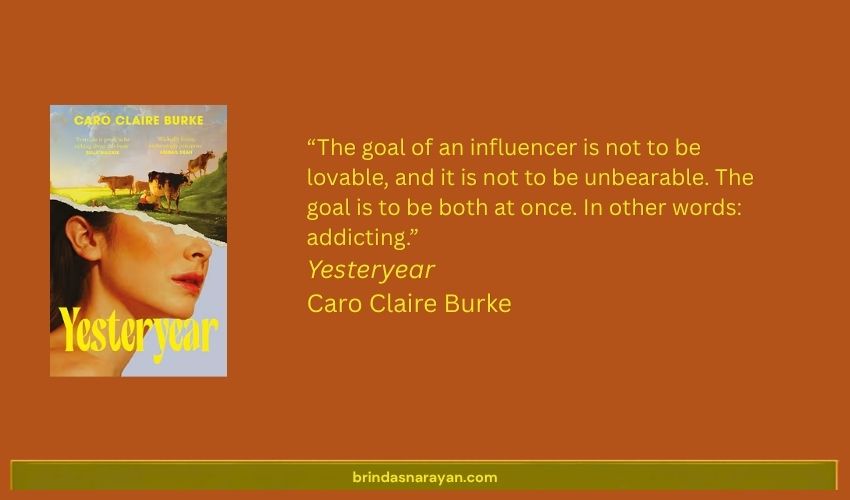
Yesteryear by Caro Claire Burke is a novel that examines such a life in a twisty, thriller format. The protagonist Natalie drops out of Harvard to marry a wealthy, imbecilic man, consciously retreating from Angry Young Women who inhabit her psyche as rivals, or as she prefers to believe, as grudging, spiteful admirers. Naturally, her radical plunge into domesticity – begetting and rearing child after child – is hardly as grueling as it might be for most. When she achieves a sought-after virality, she acquires the trappings of an influencer: nannies, a producer, staff for the fields and more significantly, a revenue stream to fund all this. The cost: she must tolerate trolls, Angry Young Women, liberal, feminist, McKinsey-climbing types, who are, in her view, merely succumbing to worlds designed by men, for men.
Watched By The Dogmatic Devout
But there are similarities between her life and that of her disgusted trolls. Her Yesteryear ranch has modern amenities tucked out of sight: dishwashers, laundry machines, microwave ovens. Moreover, the nannies and field hands are hidden from cameras. Her followers, consisting of manosphere men and fundamentalist women, need to believe that bliss can be forged by all who try. Positioned too as a backlash to an extreme feminism – that scoffed, problematically perhaps, at all feminized work – it’s wielded as a response to the alienations of modernity. How should one contend with fluid social and gender roles in coastal cities? By retreating to a static countryside, where God-believing Christians and white supremacists can rear children with “good” wholesome values.
Yanked Into a Horrific Past
But Natalie’s dream life turns nightmarish when she wakes up in a real, 1850s-type, physically and emotionally taxing past. It’s a place bereft of modern gadgets, or nannies, or field help. Besides, her earlier children have been replaced by new, but vaguely familiar ones. Here she has to actually wash clothes in three tubs till her fingers bleed. Her placid husband of the earlier Yesteryear has now acquired the aggressive tones of cowboy masculinity. It’s work, work, work from morning to night, especially for Natalie and her daughters. The men – her husband and sons – seem to saunter in and out, engaging in an enraged timepass that marked masculinity then and also now. Natalie repeatedly plots her escape from this enslaving past to her pretend-play Instagrammable house-house.
Pursuing Unattainable Perfection
The point perhaps isn’t whether she escapes or how. It’s more important as an indictment of America in the present. Not just the current Trumpian era, but even the recent past, where a specific type of despair and loneliness is seeping into households. Where people are splitting into exuberant online selves and glum offline personas, where faith and community has receded but not been replaced by other purposeful bonds. Where celebrityhood and fame feels attainable by many, but once achieved, can turn toxic or deleterious. It also raises issues about sharenting – the online performance of parenting – and the exposure of children without their consent. By constantly wading in what Nicholas G. Carr terms “The Shallows”, what hidden depths are we forsaking? When Reality TV becomes Reality, who are we sans cameras or other watchful eyes? Burke also draws an important parallel between anxious believers and the social media obsessed. Both are surveilled: the former by the Lord, and the latter, by shifty fans. Can we keep performing Perfection if we are being evaluated 24X7?
Getting by With Humor
The book, as the author notes in her Acknowledgments, has already been optioned by Anne Hathaway. While a film is in the works, it’s a gripping page-turner for anyone who’s lost their reading mojo. It’s funny, biting, timely, revealing. If you currently get your news from Late Night hosts rather than wade into the muck of political missteps, Yesteryear can help. Like the pills that stuck-in-the-past Natalie swallows, laughter is medicinal.
References
Caro Claire Burke, Yesteryear, 4th Estate, Harper Collins, London, 2026